Women in Computing
Celebrating the pioneering women who shaped computing history — from the first algorithm in 1843 to the AI revolution of today
Pioneers Who Changed the World
Click on any card to learn more about these extraordinary women and their contributions to computing.

Ada Lovelace
The First Computer ProgrammerAda Lovelace wrote the first algorithm intended for implementation on Charles Babbage's Analytical Engine, making her the world's first computer programmer. Her visionary notes described how the engine could go beyond mere calculation to create music and art.

Grace Hopper
Pioneer of Computer ProgrammingRear Admiral Grace Hopper was a computer scientist and United States Navy officer. She was one of the first programmers of the Harvard Mark I computer and invented the first compiler for a computer programming language. She popularised the term "debugging" after finding a moth in the Mark II computer.

Hedy Lamarr
Inventor of Frequency-Hopping Spread SpectrumHollywood actress and inventor Hedy Lamarr co-invented frequency-hopping spread spectrum technology during World War II. This invention became fundamental to modern wireless communications including Wi-Fi, Bluetooth, and GPS.
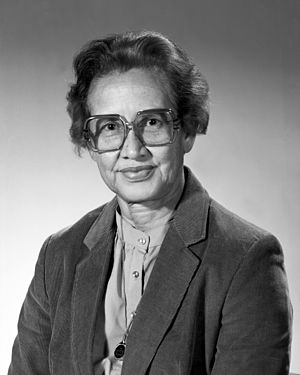
Katherine Johnson
NASA MathematicianKatherine Johnson was a mathematician whose orbital mechanics calculations were critical to the success of NASA's early space missions. Her work was essential to John Glenn's orbital flight and the Apollo 11 Moon landing. She was one of the first African-American women to work at NASA.

Mary Jackson
NASA's First Black Female EngineerMary Jackson became NASA's first Black female engineer after successfully petitioning for access to advanced engineering courses. She spent over two decades developing and testing aircraft, contributing crucial research in aerodynamics.

The ENIAC Programmers
Six Women Who Programmed the First Electronic ComputerKay McNulty, Betty Jennings, Betty Snyder, Marlyn Meltzer, Fran Bilas, and Ruth Lichterman were the original programmers of ENIAC, the first general-purpose electronic computer. They programmed it using physical switches and cables, without any programming language, manual, or prior example to follow.
Sister Mary Kenneth Keller
First Woman to Earn a PhD in Computer Science in the USASister Mary Kenneth Keller was an American nun and educator who was one of the first people in the United States to earn a PhD in computer science in 1965. She contributed to the development of the BASIC programming language and founded the computer science department at Clarke University.

Jean E. Sammet
Programming Language PioneerJean E. Sammet developed the FORMAC programming language and was one of the developers of COBOL. She documented the history of programming languages in her landmark book and served as president of the Association for Computing Machinery (ACM).

Radia Perlman
Mother of the InternetRadia Perlman invented the Spanning Tree Protocol (STP), which is fundamental to the operation of network bridges and, by extension, the Internet as we know it. Her algorithm transformed Ethernet from a technology limited to small networks into something that could create large networks.

Margaret Hamilton
Apollo Software Engineering PioneerMargaret Hamilton led the team that developed the on-board flight software for NASA's Apollo missions. Her rigorous approach to software engineering prevented an abort of the Apollo 11 Moon landing. She coined the term "software engineering" to give the discipline legitimacy.

Elizabeth Feinler
Internet PioneerElizabeth "Jake" Feinler ran the Network Information Center at Stanford, which was the registry for Internet domain names. Her group developed the domain naming system of .com, .edu, .gov, .mil, .org, and .net that we still use today.

Adele Goldberg
Smalltalk Co-creatorAdele Goldberg was one of the developers of the Smalltalk programming language at Xerox PARC. She helped create the graphical user interface concepts that Steve Jobs saw and later inspired the Macintosh. Her work shaped modern desktop computing.
Janese Swanson
Champion for Girls in TechJanese Swanson co-created the "Girl Tech" line of toys and technology products designed to encourage girls' interest in technology. She fought against gender stereotypes in the tech industry and inspired a generation of girls to explore computing.

Shafi Goldwasser
Cryptography PioneerShafi Goldwasser is a computer scientist known for her work in computational complexity theory and cryptography. She co-invented probabilistic encryption and zero-knowledge proofs, winning the Turing Award in 2012 for her transformative contributions to computer science.

Reshma Saujani
Founder of Girls Who CodeReshma Saujani founded Girls Who Code, a nonprofit organisation that aims to close the gender gap in technology. The organisation has reached hundreds of thousands of girls through its programmes, becoming one of the leading voices for women in technology.

Megan Smith
First Female US Chief Technology OfficerMegan Smith served as the third Chief Technology Officer of the United States under President Obama. Previously a VP at Google, she championed diversity in tech and open data initiatives, bringing a focus on inclusion to the highest levels of government technology policy.

Katie Bouman
Captured the First Image of a Black HoleDr. Katie Bouman led the development of the algorithm that made it possible to create the first-ever image of a black hole. While still a graduate student, she developed the CHIRP algorithm that combined data from radio telescopes around the world to produce the historic image released in 2019.

Women in AI & Computing Today
Shaping the Future of TechnologyWomen continue to break barriers in computing, from leading AI research labs to founding tech companies. Pioneers like Fei-Fei Li (AI/computer vision), Joy Buolamwini (algorithmic fairness), and Timnit Gebru (AI ethics) are ensuring technology is developed responsibly and inclusively for the future.
Our Women in Computing
The women behind the Wits Computing Museum — bringing the history of computing to life and inspiring the next generation of technologists.
Gabriella
Passionate about preserving computing history and making it accessible to everyone. Gabby has been instrumental in bringing the Wits Computing Museum to life through research, design, and development.
Museum Founder
Driven by a mission to celebrate the rich history of computing at Wits and inspire the next generation. Leading the effort to build a museum that honours the past while embracing the future of technology.
“We stand on the shoulders of the women who came before us. This museum is our way of ensuring their stories are never forgotten.”
Inspired by These Stories?
Visit the Wits Computing Museum to explore more of computing history and see these stories come to life.
Explore the Full Collection